


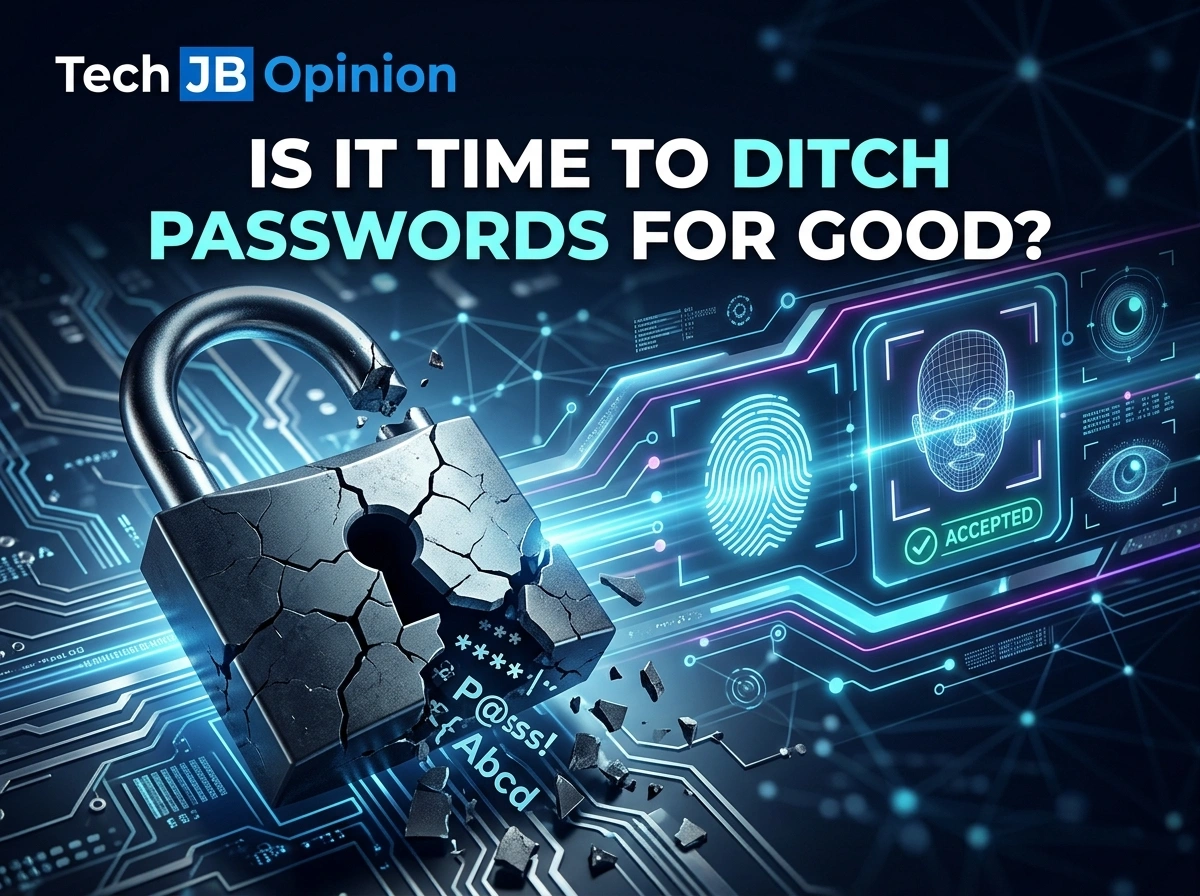
For decades, the humble password has guarded our digital lives. From email accounts to online banking, those strings of letters, numbers, and symbols have been the first line of defense. But here is the uncomfortable truth: passwords are failing us. They are hard to remember, easy to steal, and a daily headache for millions of users across Malaysia and the world.
So the question worth asking is simple yet bold. Has the time finally come to ditch passwords for good? We think the conversation deserves a serious look.
The Cracks in the Password System
Let’s be honest. Most of us are terrible at managing passwords. We reuse the same one across multiple accounts. We pick something easy like our birthday or a pet’s name. And when forced to create something complex, we scribble it on a sticky note or save it in a notes app.
This human behavior is exactly what cybercriminals count on. Weak and reused passwords remain one of the leading causes of data breaches. A single leaked password can open the door to dozens of connected accounts, putting personal data, finances, and even business operations at risk.
The problem grows worse as our digital lives expand. The average person juggles dozens of online accounts. Remembering a strong, unique password for each one is nearly impossible without help. Password managers offer a partial fix, but they also create a single point of failure. Crack the master password, and everything falls.
For value-conscious users and growing businesses alike, the cost of a breach is steep. Lost trust, damaged reputation, and financial penalties add up quickly. It is clear the old system is straining under the weight of modern demands.
Enter the Passwordless Era
The good news is that better options now exist. The technology industry has been quietly building a future where you may never type a password again. This shift, often called passwordless authentication, aims to replace fragile text-based logins with something far more secure and convenient.
At the heart of this movement are a few key technologies worth understanding.
Biometrics: You Are the Password
Fingerprint scanners and facial recognition have already become part of everyday life. If you unlock your phone with your face or thumb, you are using biometrics. These methods rely on something unique to you that cannot be easily guessed or copied.
Biometrics offer a smooth experience. There is nothing to remember and nothing to type. For urban users who value speed and simplicity, this feels like a natural step forward. However, biometrics are not flawless. Once compromised, you cannot exactly change your fingerprint the way you change a password. That is why biometrics work best as part of a layered approach rather than a standalone solution.
Passkeys: The Quiet Revolution
Perhaps the most promising development is the rise of passkeys. Backed by major technology companies, passkeys replace passwords with a pair of cryptographic keys. One key stays safely on your device, while the other lives with the service you are logging into.
When you sign in, your device proves your identity without ever sending a secret across the internet. This makes passkeys highly resistant to phishing attacks, which trick people into handing over their credentials. Since there is no password to steal, there is nothing for criminals to grab.
Passkeys also sync across your devices, so logging in feels effortless. Many experts believe this technology represents the strongest candidate to truly replace passwords at scale. Industry watchers such as teck jb have noted how quickly major platforms are adopting passkey support, signaling a genuine turning point in how we think about digital identity.
Multi-Factor Authentication: The Trusted Middle Ground
While we wait for a fully passwordless world, multi-factor authentication, or MFA, remains a vital safeguard. MFA adds an extra layer by requiring a second proof of identity, such as a code sent to your phone or a tap on an authenticator app.
Even if a criminal steals your password, MFA can stop them in their tracks. It is not perfect, and some methods like SMS codes have known weaknesses. Still, MFA dramatically reduces the risk of unauthorized access. For anyone not yet ready to go fully passwordless, enabling MFA everywhere is the single smartest move you can make today.
The Cultural and Practical Side of the Shift
Technology never exists in a vacuum. Any move toward passwordless systems must consider real people and their habits. In a diverse market like Malaysia, where users span different generations, languages, and comfort levels with technology, adoption will not happen overnight.
Older users may feel uneasy trusting their face or fingerprint to log into a bank. Some may worry about what happens if they lose their device. These concerns are valid and deserve thoughtful answers. The best passwordless systems build in backup methods and clear recovery options, so no one gets locked out of their digital life.
Businesses also have a role to play. Companies that adopt passwordless logins must communicate clearly, offer local-language support, and guide users through the change with patience. Done right, the payoff is huge: fewer support tickets, lower fraud, and happier customers who no longer dread the login screen.
There is also the matter of trust. People need to believe that handing over biometric data is safe and that their privacy is respected. Transparent policies and strong data protection are essential to win that trust, especially among brand-loyal consumers who expect companies to do right by them.
So, Should We Ditch Passwords?
Here is our honest take. The password is not dead yet, but it is clearly on borrowed time. The weaknesses are too many, and the alternatives are too strong to ignore. Passkeys in particular point toward a future that is both safer and simpler.
That said, the transition will be gradual, not sudden. For now, the smartest path is a layered one. Use passkeys where you can. Enable MFA on every account that supports it. Lean on biometrics for convenience. And keep your remaining passwords long, unique, and stored in a reputable manager.
The goal is not to chase every new trend but to build genuine resilience. Security works best when it fits naturally into daily life rather than fighting against it. The technologies emerging today finally make that possible.
A Future Worth Building Toward
The debate over passwords is really a debate about how we protect our identities in a connected world. As more of our lives move online, the stakes only rise. We owe it to ourselves to demand better tools than a string of characters we struggle to remember.
The shift to passwordless authentication is not a question of if, but when. The pieces are already falling into place. Major platforms are on board, the technology is mature, and users are ready for something better.
Our verdict? It may not be time to delete every password overnight, but it is absolutely time to start letting go. The future of digital identity is passwordless, and that future is closer than most people think. The sooner we embrace it, the safer and simpler our digital lives will become.






Leave a Reply