


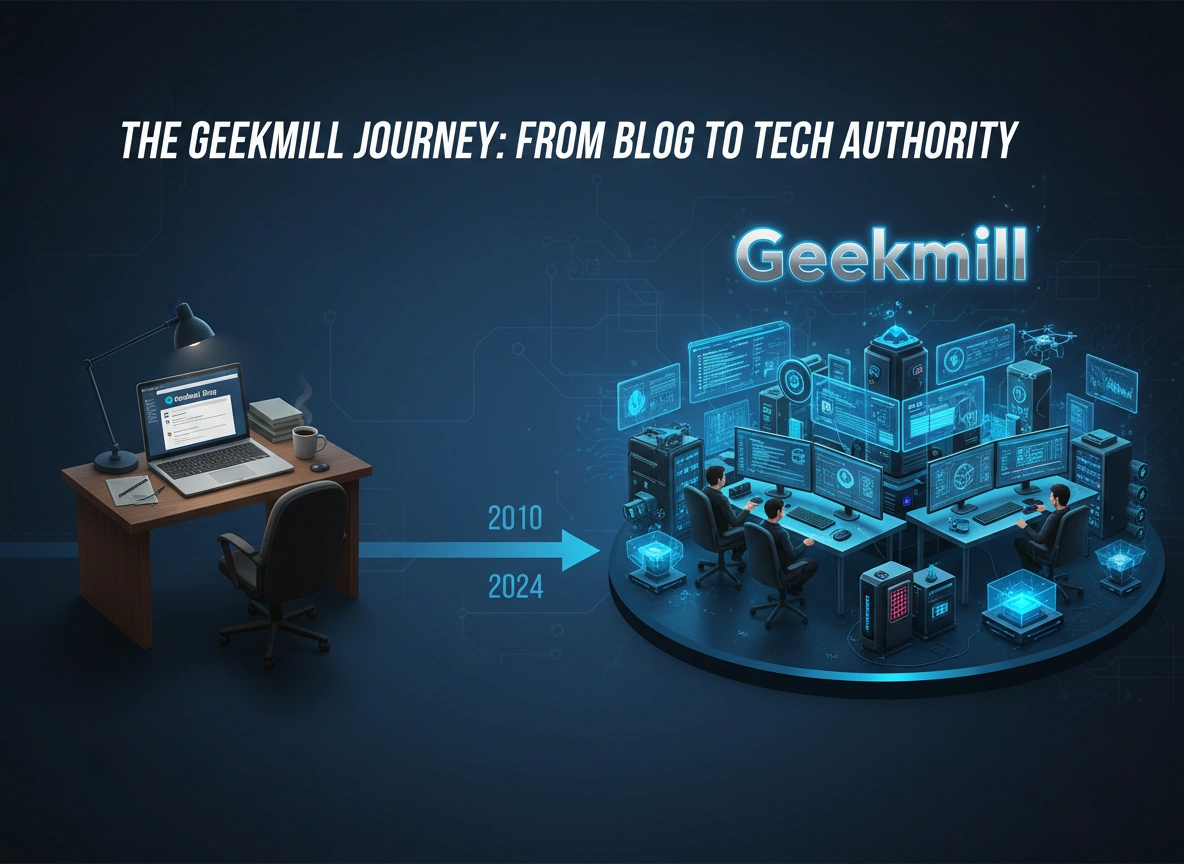
Building a successful media brand in the crowded technology space is no small feat. It requires more than just enthusiasm for gadgets; it demands a strategic vision, relentless consistency, and the ability to pivot when the digital landscape shifts. The story of Geekmill serves as a powerful case study in this exact journey. What began as a humble passion project—a simple blog sharing personal opinions on software updates—has matured into a comprehensive tech authority trusted by thousands.
This article explores the transformative journey of Geekmill, examining the critical milestones, strategic decisions, and hard-learned lessons that propelled it from a personal diary to an industry powerhouse.
The Humble Beginnings: Passion Meets the Pixel
Every major platform starts with a single post. For Geekmill, the origin story is grounded in genuine curiosity. In the early days, the internet was already saturated with major players like TechCrunch and The Verge. Breaking into this space seemed impossible for a new entrant. However, Geekmill didn’t try to compete with the giants on day one. Instead, it focused on a micro-niche: detailed, user-centric troubleshooting and honest software reviews.
The initial strategy was simple. While big sites covered breaking news about massive corporate mergers, Geekmill focused on the user who couldn’t get their printer drivers to work or needed to know if a specific $20 app was worth the money.
Early Challenges
The first year was defined by obscurity. Traffic was minimal, and the “team” was often just a single writer wearing every hat—editor, SEO specialist, and social media manager. The biggest challenge wasn’t content creation; it was visibility. Without a marketing budget, organic growth was the only option. This forced a reliance on Search Engine Optimization (SEO) long before it became a buzzword for every marketer.
Pivoting to Professionalism: The Growth Phase
As traffic began to trickle in, a shift occurred. The informal, blog-style writing began to evolve. To be taken seriously as an authority, the content had to look and feel authoritative. This marked the transition from “blogger” to “publisher.”
Establishing Editorial Standards
One of the most significant milestones in Geekmill’s evolution was the implementation of strict editorial guidelines. The “I think” statements were replaced with data-backed analysis. If a review claimed a laptop had poor battery life, it wasn’t just a feeling—it was based on standardized rundown tests.
This shift accomplished two things:
- Trust: Readers realized they were getting objective information, not just subjective rants.
- Consistency: Regardless of who wrote the article, the voice remained unified and professional.
Expanding the Content Mix
To grow beyond a niche audience, the content strategy had to expand. Geekmill moved from simple how-to guides into broader territories:
- Industry Analysis: Deep dives into market trends, such as the rise of SaaS (Software as a Service) or the implications of AI in creative workflows.
- Hardware Reviews: Moving beyond software to review physical tech required logistics, relationships with PR agencies, and a budget for testing equipment.
- Interviews: Speaking with developers and startup founders added a layer of insider credibility that simple commentary could not provide.
Building Authority Through Adaptation
The tech industry changes faster than perhaps any other sector. A strategy that works in January might be obsolete by December. Geekmill’s survival and growth depended heavily on its agility.
Surviving the Algorithm Shifts
Over the years, search engines have rolled out update after update, often decimating the traffic of smaller publishers overnight. Geekmill navigated these turbulent waters by prioritizing user intent over keyword stuffing. When the “Helpful Content Update” shook the industry, sites that were writing for robots crashed. Geekmill, having pivoted to in-depth, expert-led content, actually saw gains.
The lesson here was clear: you cannot outsmart the algorithm, but you can align with its ultimate goal—satisfying the user.
Embracing Multimedia
Text on a screen is no longer enough. The modern tech audience consumes content across various mediums. Geekmill recognized that to remain an authority, it had to be present where the conversations were happening. This meant expanding into video content and newsletters.
The newsletter, specifically, became a vital asset. It reduced reliance on search engine traffic and created a direct line to the most loyal readers. It transformed casual visitors into a community.
The Credibility Component: Trust as Currency
In an era of fake news and AI-generated spam, trust is the most valuable currency a publisher holds. Geekmill built this trust through transparency.
Disclosure and Ethics
As the site grew, opportunities for monetization increased. Sponsored posts and affiliate marketing became part of the revenue model. However, the team made a critical decision early on: strict separation between editorial content and advertising. Every sponsored post was clearly labeled. Every affiliate link was disclosed.
This transparency might have cost short-term revenue, but it bought long-term loyalty. Readers knew that when Geekmill recommended a product, it wasn’t just because the commission rate was high.
Developing Expert Voices
You can’t be an authority on everything. Geekmill started bringing in specialized contributors. Instead of a generalist writing about cybersecurity, they hired network security professionals to write those pieces. Instead of a tech enthusiast reviewing enterprise cloud solutions, they brought in a systems architect.
This “practitioner-led content” elevated the brand significantly. It meant that the advice given wasn’t just theoretically correct—it was battle-tested in the real world.
Strategic Milestones: A Timeline of Growth
Looking back, several key moments defined the upward trajectory:
- The First Viral Hit: A comprehensive guide on privacy settings during a major social media data scandal put Geekmill on the map. It proved that timing and utility were a potent mix.
- The Site Redesign: Moving from a standard WordPress template to a custom-designed interface improved user experience (UX) and site speed, directly impacting retention rates.
- The Launch of “Geekmill Pro”: Introducing a premium tier for deep-dive industry reports signaled that the content was valuable enough to pay for, further cementing authority status.
Lessons for Aspiring Tech Entrepreneurs
The journey of Geekmill offers a blueprint for anyone looking to build authority in a specific niche. It proves that you don’t need venture capital or a massive team to compete; you need strategy and patience.
1. Niche Down Before You Scale Up
Don’t try to cover the entire tech industry on day one. Pick a lane—whether it’s VR headsets, mechanical keyboards, or open-source coding—and own it completely. Be the best resource in the world for that one specific thing before you broaden your scope.
2. Quality is a Marketing Strategy
In a world of infinite content, quality is a differentiator. One comprehensive, well-researched article is worth more than twenty hastily written news recaps. Invest time in creating “evergreen” content that will remain relevant for years.
3. Build an Audience, Not Just Traffic
Traffic is a vanity metric; an audience is a business asset. Focus on capturing emails and building community on social platforms. Traffic comes and goes with search engine whims, but an email list is yours forever.
4. Adaptability is Survival
The tools and platforms will change. The way people consume content will change. If you are rigid in your approach, you will become irrelevant. Stay curious about how media is evolving and be willing to experiment with new formats.
Conclusion
The evolution of Geekmill from a solitary blog to a respected tech authority was not an accident. It was the result of deliberate choices: to prioritize the reader over the algorithm, to value accuracy over speed, and to build a brand based on integrity.
As the tech landscape continues to shift with the advent of AI and new computing paradigms, the principles that built Geekmill remain relevant. Authority is not given; it is earned, post by post, insight by insight. For those looking to replicate this success, the roadmap is clear: start small, think big, and never compromise on value.










Leave a Reply