


Search engine optimization is an ever-evolving discipline, yet one element remains fundamentally critical to online success: building digital authority. When search engines evaluate a website, they look for signals of trust, relevance, and credibility. Among these signals, the connections your site makes with other domains serve as a primary indicator of your value to users.
For businesses aiming to capture American audiences, the origin of these connections matters immensely. A website looking to rank highly for competitive keywords needs more than just good content and technical optimization. It requires a robust profile of endorsements from reputable sources. However, not all endorsements carry the same weight. Geography, relevance, and domain authority intersect to determine exactly how much value a link passes to your site.
This guide explores the strategic advantages of acquiring high-quality, geographically relevant links. We will examine how localized link building impacts search engine algorithms, why the American digital market presents unique challenges, and how implementing safe, effective strategies can systematically improve your organic visibility.
The Foundation of SEO: Understanding Backlinks
At its core, a backlink is simply a hyperlink from one website to another. Search engines like Google treat these links as votes of confidence. If a reputable website links to your content, search algorithms interpret this as evidence that your content is valuable, accurate, and worth displaying to searchers.
The quality of these links heavily influences your website’s Domain Rating (DR) and overall authority. A single link from a well-respected, high-traffic domain can provide more SEO value than dozens of links from obscure or low-quality sites. When search algorithms crawl the web, they evaluate the context of the link, the authority of the referring domain, and the relevance of the surrounding text.
Historically, SEO practitioners focused on sheer volume, acquiring as many links as possible regardless of source. Algorithms have matured significantly since then. Modern search engines penalize manipulative practices, such as participating in link farms or private blog networks (PBNs). Today, successful link building requires a meticulous focus on quality, contextual relevance, and editorial integrity.
The Importance of Geo-Targeted Backlinks
Search engines prioritize user experience above all else. When a user searches for a service, product, or piece of information, the algorithm attempts to provide the most locally and culturally relevant results. This makes geo-targeted link building an essential component of a successful SEO strategy.
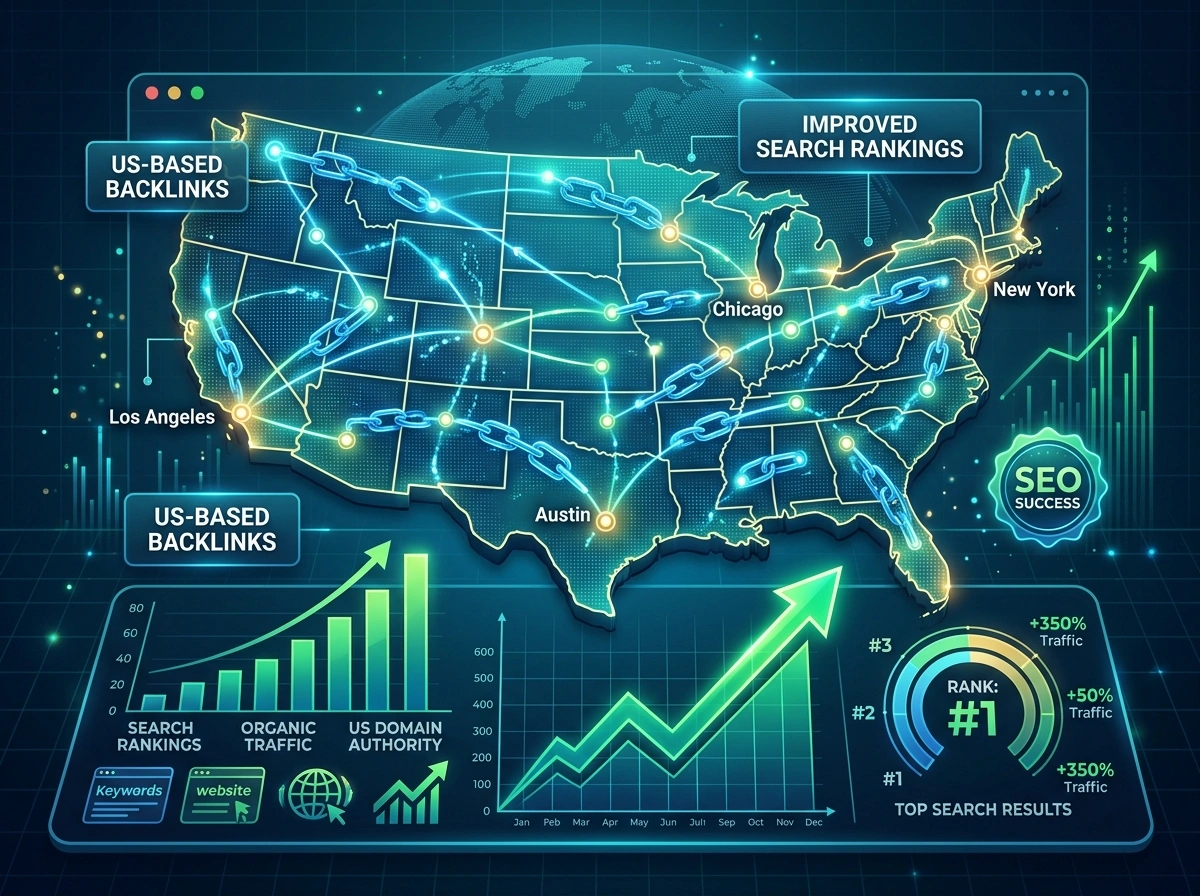
If your primary audience resides in the United States, acquiring links from websites based in Europe or Asia might not provide the specific signals search engines need to rank your site locally. Geo-targeted links tell search algorithms that your content is recognized and endorsed by entities within the same region as your target audience.
This regional relevance directly impacts how your site appears in localized search queries. When an American publication, blog, or industry directory links to your domain, it reinforces your relevance to the US market. This is particularly vital for businesses selling regional services or products, but it also applies broadly to any company hoping to capture US-based organic traffic.
What Makes the US Market Different?
The United States represents one of the most competitive digital ecosystems in the world. With millions of active websites competing for top positions on search engine results pages (SERPs), breaking through the noise requires a highly sophisticated approach.
American consumers conduct billions of searches daily, relying heavily on Google to inform their purchasing decisions. Because the financial rewards for ranking on the first page are immense, companies invest heavily in their SEO infrastructure. This high level of competition means that standard, baseline SEO practices are rarely enough to secure top rankings.
Furthermore, US-based websites typically feature high domain authority and stringent editorial standards. Earning a placement on a reputable American blog or news outlet requires high-quality content and professional outreach. Because these domains are highly selective, search algorithms assign significant weight to the links they provide. Penetrating this market requires a strategy that aligns with these rigorous standards.
Strategic Advantages of US-Based Link Acquisition
Building a link profile heavily weighted with American domains offers several distinct advantages for companies targeting stateside consumers. First, it aligns perfectly with search engine localization algorithms. By establishing a footprint of US-based references, you signal that your content is tailored to the cultural and commercial expectations of American users.
Second, links from US websites often drive higher-quality referral traffic. When a relevant American blog links to your site, the users who click that link are more likely to match your target demographic. This traffic tends to exhibit lower bounce rates and higher conversion rates, sending additional positive engagement signals to search engines.
To execute this effectively, many organizations choose to buy backlinks usa from professional agencies that specialize in manual outreach and white-hat placements. Partnering with experts who understand the nuances of the American digital landscape ensures that your links are placed on indexed articles with verified organic traffic, rather than spammy or automated networks.
The Mechanics Behind Quality Links and Search Rankings
Understanding how high-quality links translate into better rankings helps businesses allocate their marketing budgets more effectively. When a strong, relevant domain links to your website, it passes along “link equity.” This equity flows through your site, boosting the authority of the specific page receiving the link, as well as your overall domain.
Search algorithms use this link equity to determine the crawl priority and indexing frequency of your site. Websites with strong backlink profiles are crawled more frequently, meaning new content and updates are recognized and ranked faster.
Moreover, quality links often feature descriptive anchor text. When other websites link to your pages using keywords relevant to your industry, it provides search engines with clear context about the topic of your page. A strategic approach involves balancing exact-match anchor text with branded and natural phrases, creating a diverse and organic-looking profile that withstands algorithmic updates.
Debunking Link Building Myths
The SEO industry is rife with misconceptions, particularly regarding the acquisition of links. One common myth is that buying links inherently violates search engine guidelines and guarantees a penalty. The reality is far more nuanced. While purchasing automated, low-quality links from PBNs or link farms is highly dangerous, compensating an agency for the time, effort, and relationships required to secure editorial placements on genuine websites is a standard industry practice.
Another prevalent misconception is that only links from massive, household-name publications matter. While high-tier media links are valuable, contextually relevant links from niche blogs and industry-specific websites often drive better targeted traffic and provide stronger topical relevance. A healthy link profile contains a diverse mix of Domain Ratings, reflecting natural growth over time.
Finally, some businesses believe that a single campaign will yield permanent results. SEO is an ongoing process. Competitors are constantly acquiring new links, and older links naturally degrade over time as websites restructure or shut down. Maintaining top rankings requires consistent, sustained investment in link acquisition.
Safe Strategies for Acquiring Links
To protect your website from algorithmic penalties, you must prioritize safety and transparency in your link building efforts. Always insist on 100% white-hat practices. This means targeting real websites with active human audiences, verified organic traffic, and strict editorial guidelines.
Consider utilizing niche edits, a strategy that involves placing your link within an existing, aged article that already ranks well for relevant keywords. Because the article is already indexed and carries authority, niche edits can provide a faster injection of link equity than publishing an entirely new guest post.
Thorough vetting is non-negotiable. Before pursuing a link, analyze the target website’s traffic trends, inbound link profile, and outbound link hygiene. Avoid sites that link heavily to sensitive or restricted industries, as this can indicate a lack of editorial oversight. Working with a dedicated provider who offers transparent reporting and guarantees their placements can significantly reduce the risks associated with link acquisition.
Elevate Your Search Visibility
Achieving sustained organic growth in a competitive digital market requires a calculated, authoritative approach to link building. Recognizing the impact of geo-targeted links, particularly within the lucrative US market, allows you to align your SEO efforts with the specific demands of search engine algorithms.
By prioritizing high-quality sources, maintaining strict adherence to white-hat methodologies, and understanding the mechanics of link equity, businesses can systematically climb the search rankings. Focus on building relationships with genuine websites, creating a diverse and natural link profile, and leveraging expert support when navigating complex markets. With a commitment to quality and strategic execution, authoritative backlinks will serve as the engine for your long-term digital growth.



Leave a Reply